Every project
has drift.
Schedules slip. Crews remobilize. Trades collide. BlackHyve shows you drift while there's still time to act — so you earn what you bid.
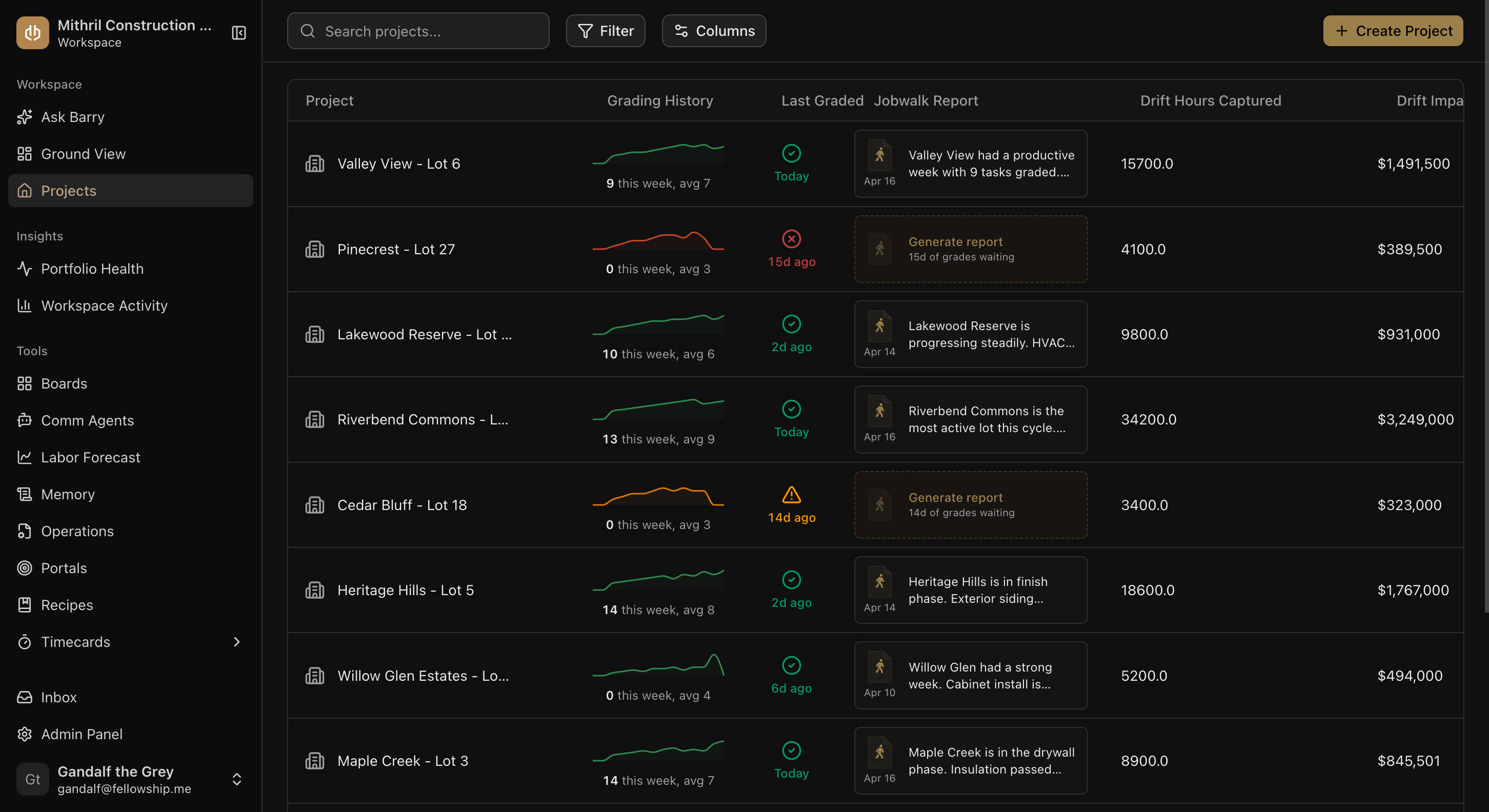
Trusted by contractors across the country


.jpeg)
You find out at closeout.
You could have known that week.
Every bid assumes the job goes the way you planned it. It never does. Access gets blocked, material shows up short, another trade is standing in your area, and your crew slows down. That's drift. Most contractors first see it as a number at closeout: three or four points gone on a job they thought they were winning.
The estimate, the time cards, the progress, and the record of what went wrong already exist on every job. They just live in four different places. Connect them — production reconciled to the estimate, drift explaining the gap — and drift shows up the week it happens, with the cause attached and time left to act. The best in the industry have done it manually for decades. BlackHyve makes it the default.
Production is
the score.
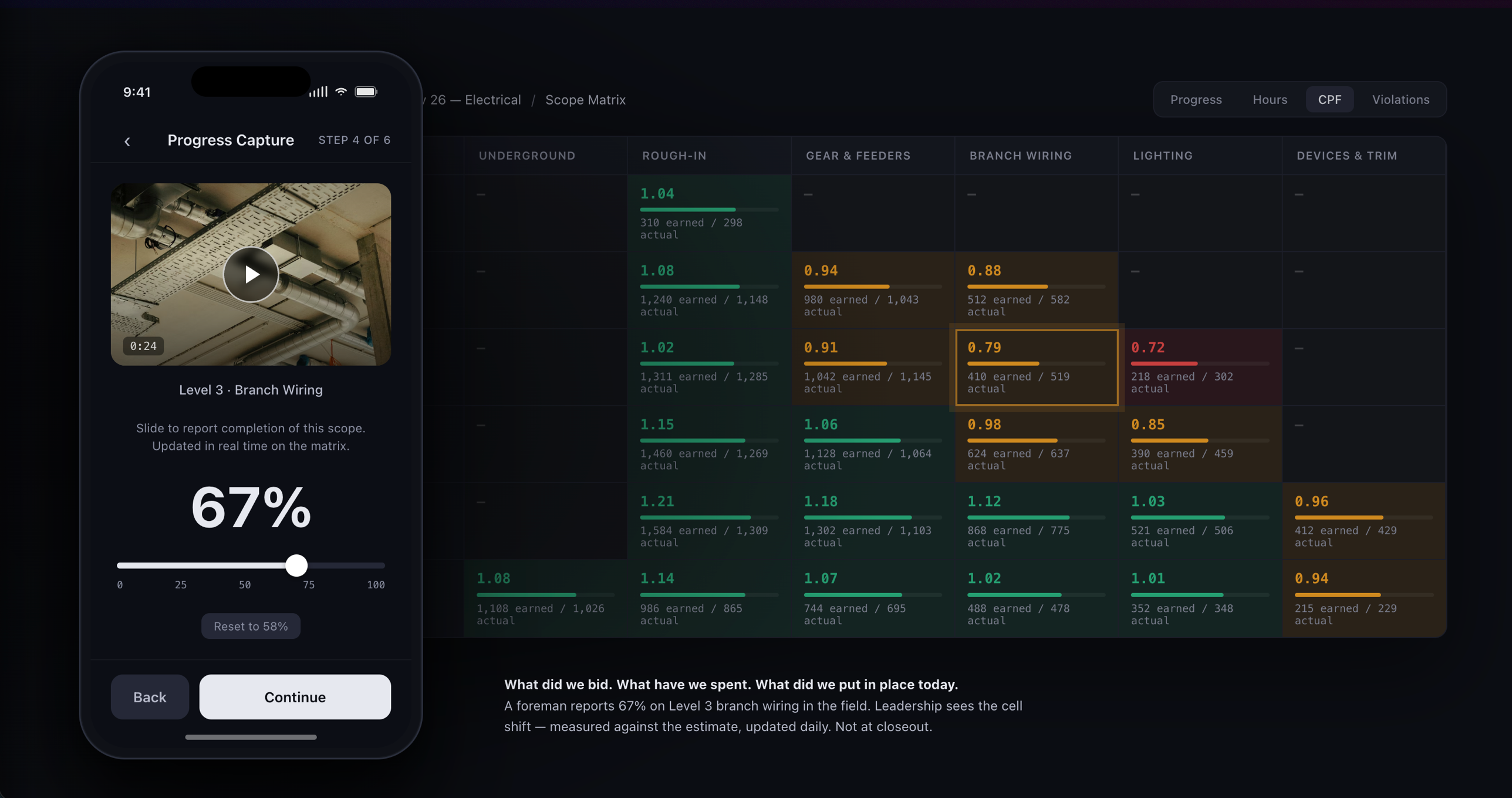
What did we bid. What have we spent. What did we actually put in place today. Most contractors have the first two. Production is the third — work installed, measured against the estimate, updated daily. Without it, you're running blind until the job closes.
Drift is
the explanation.
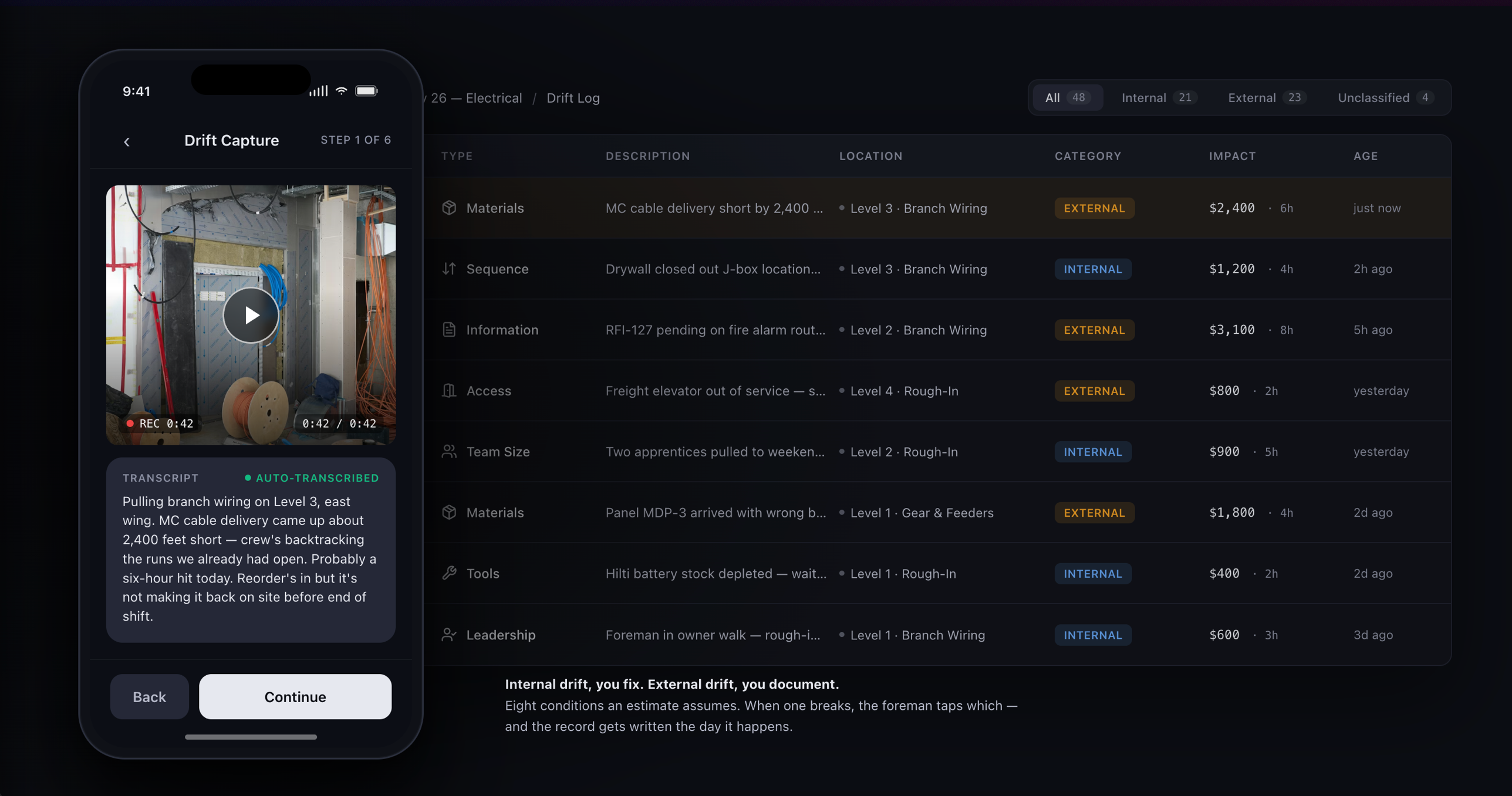
Schedules slip. Crews remobilize. Trades collide. Every one traces back to one of eight conditions the bid assumed: access, quality, sequence, information, material, tools, leadership, team size. When one breaks, your crew slows and margin bleeds. Internal drift, you fix. External drift, you document. Either way, the record gets written the day it happens.
"I ran a $25M mechanical company. By the time I was done, we had 200 people across five states. I was doing everything the industry said to do — weekly reports, time cards, a good super in the field. I was checking every box. And every single closeout, I'd find out we'd lost three or four points on a job I thought we were winning."
It wasn't just one job. It was every job. I'd sit through closeout and find out where the money actually went, and by then it was gone. Somebody asked me once whether I was making money on a scope mid-job, and I realized I couldn't tell them. Not really. Not until it was over.
The problem wasn't my crews, and it wasn't the scope. It was that none of what I was tracking was connected. My estimate lived in a spreadsheet, my time cards lived in payroll, and progress lived in the super's head. And drift — access blocked, materials late, trades stacked — that just got handled after the fact, if it got handled at all.
I was checking every box and still scrambling. The gap wasn't in any one practice. It was in the connections between them.
That's why I built BlackHyve.

Ryan Haught
CEO & Co-Founder, BlackHyve
Earn what you bid.
See drift while there's still time to act.
On your last job, what was the gap between what you bid and what you earned? In one week you'll see production against bid and drift explaining the gap — on a real project, with your numbers.